Zookapi Animals
These files were given to ZA to host after the Zookapi site closed.
10 files
-
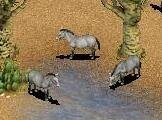
African Wild Ass by rightEyElash
By Fern
African Wild Ass by rightEyElash
The land of the African Wild Ass is flat, arid and stony, with hillocks that the animals stand on to survey the horizon. Temperatures soar to as high as 122 degrees Fahrenheit during the day, and shade is scarce. Small herds of Somali wild asses are known to travel great distances after dark in search of waterholes, and they can last two to three days without drinking at all. These tough yet beautiful animals are a living part of Africa's history and are depicted in cave paintings in North Africa. At one time, sultans ordered a man's hand cut off if he killed a wild ass.
However, this protection lapsed and the equids were killed for their skins and meat. Today it is critically endangered and protected by the governments of Somalia and Ethiopia. This animal is NOT a mule.
This animal is made from the Przewalski's Wild Horse from the Complete Collection. It is a stat change as well as a recolor. This animal likes desert terrain as well as foliage from Africa only.
Date Added: November 2003
Current African Wild Ass.ZTD dated November 5, 2025
Updated November 5, 2025 by Jay to not allow the animal to be placed on water terrain since it does not have swim animations, to have the tooltip for the preferred object appear for the female and young, to link to the sounds of Przewalski's Wild Horse, to increase the chances of ZT seeing when an escaped animal is hit by a tranquilizer dart, to add separate adult and young icons for the animal list, and to remove unnecessary files and configuration lines.
19 downloads
(2 reviews)0 comments
Updated
-
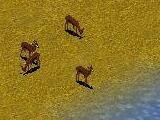
Bontebok by rightEyElash
By Fern
Bontebok by rightEyElash
Rich purplish brown with a broad white blaze on its long muzzle, the Bontebok, or Blesbok as it is also called, has well developed, lyre-shaped, ringed horns. Bonteboks are only found in South Africa, in grassland and sparsely wooded regions. In the 1830's, they almost went extinct, (only 17 were left) but several herds were preserved in parks and reserves. It remains Africa's rarest antelope.
This animal is made from the Thomson's Gazelle. It is a color change as well as a minor stat change. It is not compatible with many animals, because from what I have read, the animal likes to keep to itself. And the animal does not make any sounds because I couldn't find out the sound it made. The idea for this animal came from seeing it at the San Diego Wild Animal Park.
Date Released: November 2003 at Zoo Admin
Current Bontebok.ZTD dated November 1, 2003
28 downloads
(1 review)0 comments
Updated
-
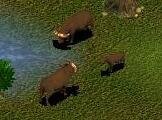
Forest Buffalo by rightEyElash
By Fern
Forest Buffalo by rightEyElash
The forest buffalo is found in the rain forest of central Africa. It has a red-orange look to it's hide, that helps to conceal it in the dark forest from predators. This animal lives in small herds that can swell to up to fifty, led by a dominant bull. All males that fail to become the dominant male are cast out, and without the protection of the group, are usually easy prey for leopards and even lions. The protection of the group is so good, that even blind buffalo can survive in it.
This animal is made from the African (cape) Buffalo. It is a color and stat change. It likes rain forest terrain and only rain forest plants from central Africa. It is fully compatible with the DeBrazza Guenon, just like it is found on exhibit at the San Diego Zoo.
Date Released: November 2003 at Zoo Admin
Current Forest Buffalo.ZTD dated November 21, 2003
12 downloads
(0 reviews)0 comments
Updated
-
Forest Elephant by rightEyElash
By Fern
Forest Elephant by rightEyElash
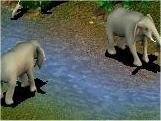
Many people think that there are just 2 species of elephant, the African and the Asian elephants. But in fact recently a third was given the status of a full species. The Forest Elephant is found in the rain forests of central Africa. It is smaller than the savannah, or Bush Elephant, and also has rounder ears. It is equipped with straighter tusks that do not curve outwards, which allow it to walk through dense rainforest without having to worry about getting them stuck in the vegetation.
This animal is made from the regular African Elephant. It is just a stat change, which allows it to be placed in a rainforest environment. This animal might come as a pleasant surprise to you when it comes to which original animal it is compatible with.
Originally Date Released: November 2003 at Zoo Admin
Current Forestelephant.ZTD dated November 2, 2003
25 downloads
(1 review)0 comments
Updated
-
Indian Rhino by rightEyElash
By Fern
Indian Rhino by rightEyElash
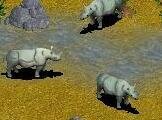
The Indian Rhino is the largest of the Asian Rhinos. The armour-like hide is thick and tough with many folds, and large, raised bumps on the neck, shoulders and flanks - a characteristic which differentiates it from the closely related Javan rhinoceros. The other differential feature is the neck fold: in the great Indian rhinoceros it does not continue across the back.
This animal is made from the black rhino. It is the first animal I have attempted to make in this way. Each animation has had the folds in the skin drawn in one by one. Also the smaller horn has been deleted so that there is only one horn. The animal location has been changed, showing it to be found in India, and it only likes the Khejri tree. The baby does NOT have the folds drawn in! It is fully compatible with the Nilgai and Blackbuck.
Originally Released November 2003 at Zookapi
Hosted at Zoo Admin after Zookapi closed
Current Indian Rhino.ZTD dated November 21, 2003
17 downloads
(1 review)0 comments
Updated
-
Nilgai by rightEyElash
By Fern
Nilgai by rightEyElash
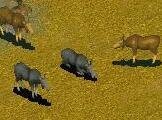
The short coat is yellow-brown in females, and gradually turns blue-grey in males as they mature. There is an erectile mane on the nape and back and a "hair pennant" in the middle of the underside of the neck. There are white markings in the form of cheek spots, edges of the lips, and a throat bib. Along the underside is a thin white stripe, which "balloons" at the rear. The slender legs support a stocky body, which slopes downwards towards the rear. The head is long and slender. Males have 20-25 cm / 8-10 inch long horns which are straight and tilted slightly forwards.
This animal is made from the female Moose. It is a color change and a stat change. The male is a light blue/dark gray and the female is a tawny color. The location has been changed so that it is found in India. It also only likes savannah grass and the khejri tree. It is fully compatible with the Indian Rhino and blackbuck. This animal can make your zoo some money as the animal has two babies.
Originally Released November 2003 at Zookapi
Hosted by Zoo Admin after Zookapi closed
Current Nilgai.ZTD dated November 22, 2003
23 downloads
(1 review)0 comments
Updated
-
Pygmy Hippopotamus by rightEyElash
By Fern
Pygmy Hippopotamus by rightEyElash
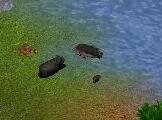
The Pygmy Hippopotamus is the smaller of the two species of hippos. It is found in the Rainforests of west-central Africa. It is usually found alone, but females may travel with babies. Unlike the common hippo, the pygmy hippo is not nearly as aquatic, spending much of its time on land. It is found close to streams, usually under thick vegetation.
The adults for this animal are made from the Hippopotamus babies, but the babies are made from warthog babies It works well because hippo babies are tiny compared to the adults. It is a stat change as well as a color change. Other differences are the terrain and foliage it uses (it also uses more foliage). Unlike the larger hippo, this hippo is not compatible with as many animals. It is also more solitary and will not tolerate more than two adults in the exhibit. Nor does it go in the water as much.
Originally Released November 2003 at Zookapi
Hosted by Zoo Admin after Zookapi closed
Current pygmyhippo.ZTD dated November 21, 2003
24 downloads
(1 review)0 comments
Updated
-
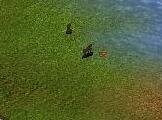
Spot Nosed Guenon by rightEyElash
By Fern
Spot Nosed Guenon by rightEyElash
This monkey is one of the most distinctly colored primates. A pure white spot on the nose, olive-green cheeks and black limbs and tail distinguish this monkey from other primates. The spot-nosed guenon's body color and gestures are part of their visual communication system. This active monkey is most often seen in the mid-canopy of forest trees.
This animal is made from the Baboon baby. It is a color change and a stat change. It likes rain forest plants form Africa. It is fully compatible with the Spot Necked Otter, as it is found on exhibit at the San Diego Zoo.
Author: rightEyElash (Zookapi)
Originally Released November 2003 at Zookapi
Hosted by Zoo Admin after Zookapi closed
Current spotnosedguenon.ztd dated January 12, 2026
Updated by Jay on January 12, 2026 to increase minimum tiles per adult from 0 to 1, to set it to not jump fences since it does not have fence jumping graphics, to have the preferred object tooltip occur for females and young, to link to ZT's baboon sounds directly instead of having copies, to play sounds as often as ZT's baboon, to give ZT more time to see if the animal was hit by a tranquilizer dart, and to remove unnecessary files and configuration lines.
14 downloads
(0 reviews)0 comments
Updated
-
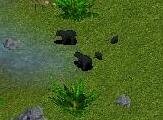
Sun Bear by rightEyElash
By Fern
Sun Bear by rightEyElash
The Malayan Sun Bear is found in the Rain Forests of Southeast Asia. It is the smallest bear in the world. The Sun Bear gets its name from the golden coloured markings on its chest. Sometimes the markings make a complete circle, resembling the sun. The Sun Bear has 5 sickle like claws on each paw which aid in climbing. The claws also help to open termite mounds and bee hives, eating up the honey with its long tongue.
The adult for this animal is made from the black bear babies. The babies are made from the warthog babies which are coloured black. The babies are pretty accurate in size as to how big they would really be. The main stat changes are the location and the terrain and foliage it uses.
Originally Released November 2003 at Zookapi
Hosted at Zoo Admin after Zookapi closed
Current sunbear.ZTD dated November 1, 2003
15 downloads
(0 reviews)0 comments
Updated
-
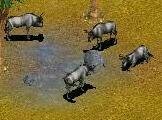
White Bearded Wildebeest by rightEyElash
By Fern
White Bearded Wildebeest by rightEyElash
The wildebeest, also known as the gnu, is a large antelope. The bull's deep grunts sound like a giant croaking frog. Because of its appearance and spirited behavior, Dutch settlers in South Africa named the animal wildebeest, which means wild beast. Migration of more than a million wildebeest, at its peak in the month of May, is joined by other animals. The animals migrate to open woodlands to feed until November, then return to the Serengeti. White-bearded gnu have increased greatly in number in recent years. In 1950, a census revealed approximately 100,000 individuals in the Serengeti region; today about 1.5 million white-bearded wildebeest are believed to be present. Wildebeest are also an important food source for predators such as lions and hyenas.
This animal is made from the Common Wildebeest. It is a stat change and a recolor. The animal likes savannah terrain and foliage from Africa only. Pretty much the same as the Common Wildebeest.
Original Date Released: November 2003 at Zoo Admin
Current whitebeardedwildebeest.ZTD dated November 2, 2003
9 downloads
(1 review)0 comments
Updated